
Low-Threshold Showers for Aging in Place in Arizona
Lots of Arizona homeowners come to us when the bathroom they've had for years starts feeling like it was designed for someone younger than they currently are.

Why Offcut Interiors Is the Right Team for Your Aging-in-Place Shower
Getting a bathroom to work properly for everyone who uses it takes more thought than most contractors put into it, and that gap shows in the finished result.
At Offcut Interiors, we’ve done enough of these projects across Arizona to know exactly where the details matter, from how the floor slopes toward the drain to where a grab bar actually needs to sit to be useful rather than decorative. We also know that this type of renovation carries real weight for families, so we keep the process straightforward, the communication honest, and the disruption to your home as minimal as the job allows.
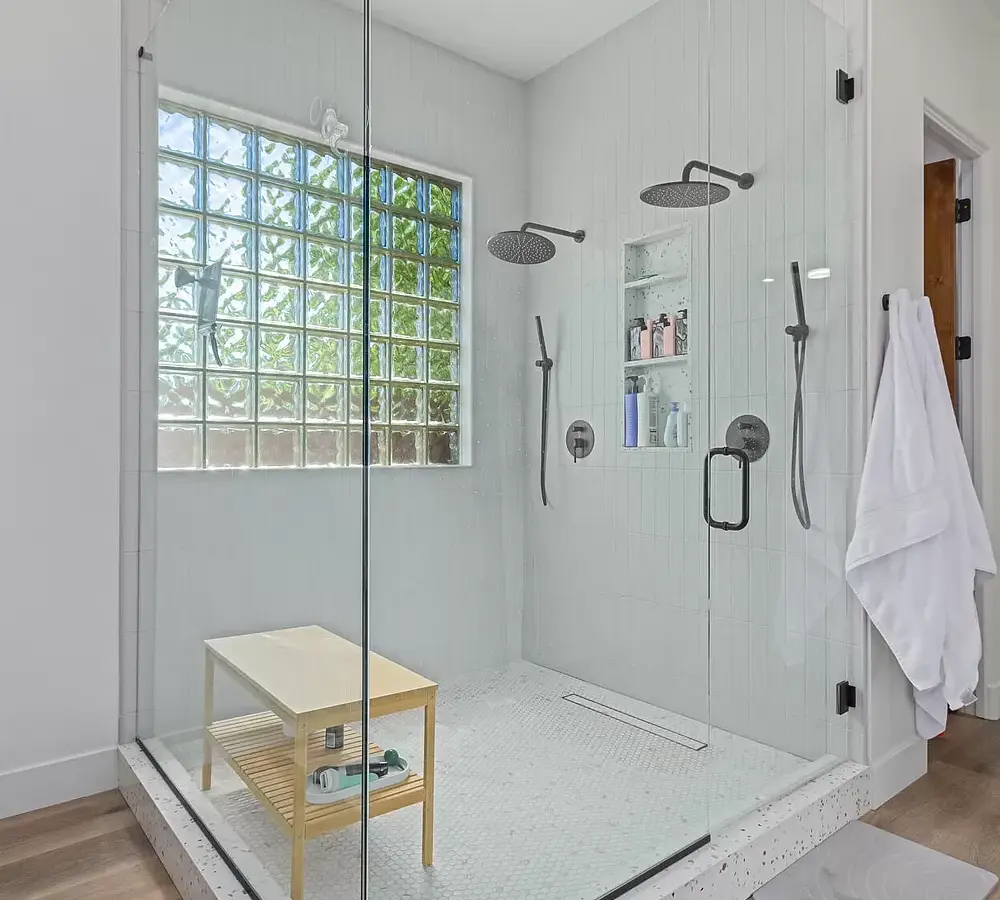
A well-designed low-threshold shower doesn’t look like a medical accommodation. It looks like a beautifully finished bathroom that happens to work for everyone in it, and that’s precisely what we aim for on every project.

- 5-year craftsmanship and manufacturer warranty
- High-quality materials built to perform long-term
- Consistent, clear communication from start to finish
- Hassle-free installation with minimal disruption to your home
- Accessible design that works for today and adapts for tomorrow
- On-time completion, respected without exception
What Arizona Homeowners Say About Working with Us
John Doering
Ashley Haxby
It’s so hard to find someone reliable AND excellent at what they offer. Look no further. Excellent service, speedy response, and just a great company to work with! Would hands down recommend.
Low-Threshold vs. Standard Showers: What's Actually Different
| Feature | Standard Shower | Low-Threshold Shower |
|---|---|---|
| Entry Height | 4–6 inch curb or step | Under 1 inch or fully flush |
| Entry Ease | Requires stepping over a barrier | Walk-in or step-over minimal |
| Slip Risk | Higher, especially when wet | Lower with proper floor finish |
| Grab Bar Compatibility | Limited by layout | Designed to accommodate |
| Bench or Seating | Rarely included | Easily incorporated |
| Wheelchair or Walker Access | Not typically accessible | Can be fully accessible |
| Drain Placement | Center standard | Linear or custom drain positioning |
| Resale Appeal | Standard | Growing value in Arizona market |
Features Worth Knowing About Before You Decide
Floor and Drainage
- Linear drain systems for a clean, barrier-free look and effective water management
- Slip-resistant tile or textured flooring surfaces rated for wet conditions
- Sloped floor design to direct water without pooling
Entry and Surround
- Fully frameless or low-profile glass panels for easy entry and maintenance
- Wide entry openings to accommodate walkers or wheelchairs where needed
- Folding or hinged bench seating built into the design
Safety Hardware
- Grab bars positioned for entry, standing, and seated use
- Handheld showerhead on an adjustable slide bar
- Pressure-balanced or thermostatic valves to prevent scalding
Wall and Finish Choices
- Large-format tile that reduces grout lines and simplifies cleaning
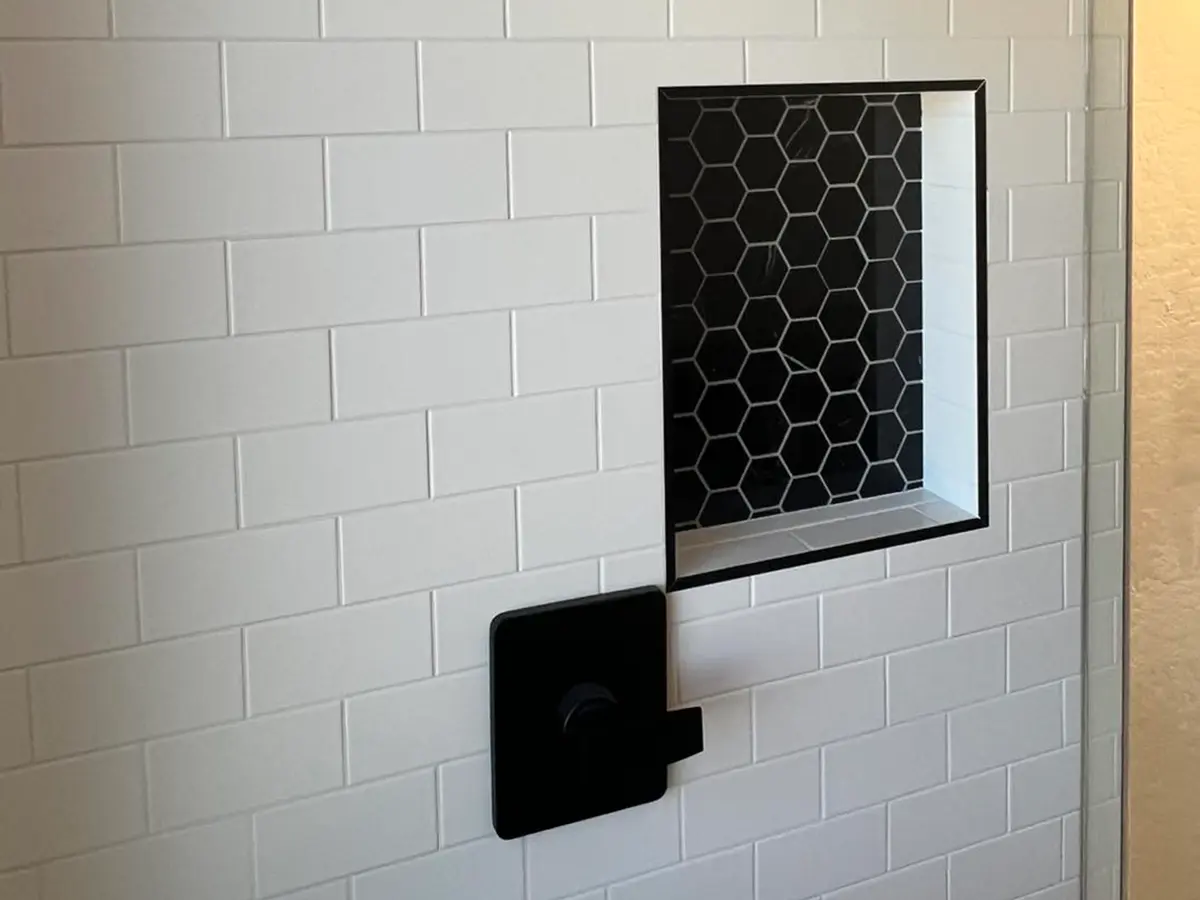
- Integrated niches and shelving at accessible heights
- Matte or textured finishes that hold up in Arizona’s hard-water conditions
Who This Type of Renovation Is Really For
Aging-in-place design tends to get framed as something you think about when things get difficult. In reality, the homeowners who get the most out of a low-threshold shower conversion are often the ones who act before there’s a crisis.
This type of project tends to be a good fit if:
- Someone in the household is managing reduced mobility, balance concerns, or a recent injury or surgery
- You're planning ahead for the years to come and want the bathroom to work without modifications later
- A family member is moving in, and the existing bathroom doesn't accommodate their needs
- Your current shower or tub setup requires physical effort that's starting to feel unnecessary
- You want to improve daily ease and comfort for any member of the household, regardless of age
- The existing bathroom layout feels cramped or dated, and you'd like to rethink the whole space while you're at it
Budget and Timeline
Budget
A low-threshold shower conversion is a considerable investment, and we won’t pretend the numbers don’t matter. What we will say is that a well-built accessible bathroom pays for itself in ways that go beyond the dollar figure. You’re building a space that works for your household today, reduces risk over time, and adds genuine appeal to your home for the long term. We’re transparent about costs from the first conversation, and we don’t move the goalposts once a project is underway.
Time
We set a realistic schedule before any work begins, and we hold to it. Your bathroom is a room you use every day, and we understand that disruption to it isn’t a minor inconvenience. Our crew works with that in mind. We show up when we say we will, keep the space as clean and functional as possible around the work, and communicate clearly when anything shifts. Most of our projects finish on schedule, and when something changes, you’ll hear it from us before it becomes an issue.
How a Low-Threshold Shower Project Actually Works
1
Plan
2
Build
3
Settle
Questions Arizona Homeowners Usually Ask Us
The terms are often used interchangeably, but there’s a practical distinction. A walk-in shower typically refers to a large open shower without a door. A low-threshold shower specifically means the entry barrier has been reduced to under an inch, or eliminated entirely, making it easier to step in without the risk of catching a foot on a raised curb. Both can be designed for accessibility. Which direction makes sense depends on your bathroom’s layout and who’s using the space. We’ll walk through that with you.
Your Bathroom Should Be the Last Thing You Worry About
Hunter
If you’re ready to talk through what your bathroom needs, call us at (480) 999-6134 or send us a message. We’re straightforward to work with, and we’ll give you honest answers from the first conversation.
Offcut Interiors has helped Arizona homeowners build bathrooms that work properly, look considered, and hold up over time. If you’re thinking about a low-threshold shower conversion, you can read more about our bathroom remodeling services or call us at (480) 999-6134 or send us a message and we’ll take it from there.
Offcut Interiors serves homeowners across the greater Arizona region, working with families at all stages of the aging-in-place planning process. Arizona is home to some of the country’s fastest-growing communities of long-term homeowners, including neighborhoods around Encanto Park and central Phoenix landmarks like Margaret T. Hance Park, where homeowners have invested in their properties for decades and want them to keep pace with their lives. The City of Phoenix continues to grow around these communities, and the homes within them deserve renovations built to last.