
Living in Arizona means dealing with temperatures that regularly climb past 110°F. Your outdoor space bakes under direct sunlight for hours, and even indoor kitchen surfaces near windows face intense heat and UV exposure. Choosing the right countertop material becomes more than a design decision when you’re dealing with extreme temperatures that can damage, discolor, or warp the wrong materials.
Phoenix homeowners know that what works in cooler climates might crack, fade, or fail here. The sun’s UV rays don’t stop at your windows, and if you’re planning outdoor kitchens, you need surfaces that can handle prolonged exposure without losing their aesthetic appeal.
Why Heat Resistance Matters in Arizona
Arizona’s climate tests materials in ways that humid climates never could. Your countertops face thermal shock when you place hot pots and pans on them after cooking. They endure UV radiation that breaks down polymer resins in some materials. Outdoor countertops deal with very high temperatures that would make countertop materials designed for indoor use buckle and fail.
The right countertop material needs to withstand heat without requiring constant maintenance or showing damage. According to the U.S. Department of Energy’s guidelines on energy-efficient home design, heat-resistant materials reduce the thermal load on your home and maintain their integrity in extreme conditions.
Top Heat-Resistant Countertop Options
Granite Countertops
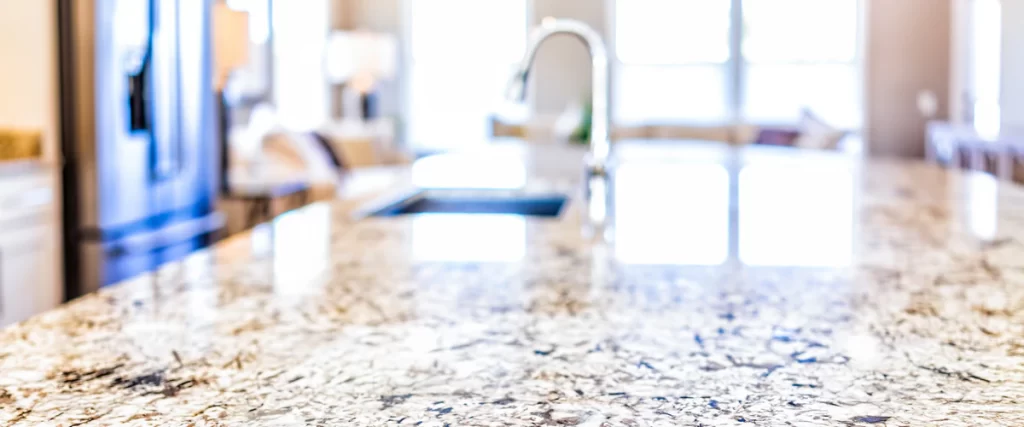
Granite’s durability makes it a favorite among many homeowners in the Southwest. This natural stone forms under extreme heat and pressure deep in the earth, so your kitchen’s high heat won’t faze it.
- Heat resistance: Granite can handle hot pots directly from the stove without damage
- UV resistance: Won’t fade or discolor in direct sunlight
- Durability: Resists scratches and daily wear in a busy kitchen
- Natural beauty: Each granite slab offers unique patterns that make your space one of a kind
Granite does require periodic sealing to prevent stains and maintain its non-porous surface. Seal it once a year, and you’ll protect against bacterial growth while keeping maintenance minimal.
Quartz Countertops
Engineered stone combines natural quartz crystals with polymer resins to create surfaces that offer both beauty and function. Quartz countertops provide excellent heat resistance, though they handle extreme heat differently than natural stone options.
The non-porous nature of quartz means you never need to seal it. Spills wipe away easily, and you won’t worry about stain resistance like you might with other materials. Modern kitchens love quartz for its consistent patterns and wide range of colors.
One consideration: while quartz withstands high temperatures from hot cookware, the resins can discolor with prolonged UV exposure. Keep quartz indoors or in covered outdoor areas rather than in full sun.
Quartzite Countertops

People often confuse quartzite with quartz, but quartzite is a pure natural stone. It starts as sandstone and transforms under intense heat and pressure into one of the most heat-proof materials available.
Quartzite offers the heat resistance of granite with even greater hardness. You can set very hot items on it without concern. Like granite, it needs periodic sealing, but the effort pays off in a surface that handles Arizona’s extreme temperatures beautifully.
Porcelain Countertops
Porcelain might surprise you as a countertop choice, but it’s extremely heat-resistant. Fired at very high temperatures during manufacturing, porcelain can handle hot pans without damage and stands up to UV rays better than almost any other material.
- Heat proof: Won’t scorch, burn, or discolor from heat exposure
- UV resistant: Maintains color integrity in direct sunlight
- Low maintenance: Non-porous surface resists stains and bacteria
- Slim profile: Lighter weight than natural stone
Porcelain works wonderfully for outdoor kitchens where other materials might fail.
Stainless Steel Countertops
For a modern, industrial look, stainless steel countertops deliver serious heat resistance. Commercial kitchens rely on stainless steel because it can withstand high heat, cleans easily, and lasts for decades.
The practical choice for serious cooks, stainless steel lets you place hot pots and pans directly on the surface. It won’t warp in extreme heat, and UV exposure doesn’t affect it. The trade-off? Stainless steel shows fingerprints and scratches more readily than stone, though many people appreciate how these create a lived-in patina.
Concrete Countertops
Concrete might seem unconventional, but it’s a durable choice that handles Arizona heat well. Sealed properly, concrete countertops resist heat, can be customized to any color or finish, and develop character over time.
Concrete works particularly well for outdoor countertops because it tolerates temperature swings without cracking when installed correctly. You’ll need to reseal it more frequently than granite, but the ability to create custom shapes and embedded details makes it worth considering.
Materials to Approach with Caution
Laminate Countertops
Budget-friendly laminate countertops struggle in Arizona’s climate. They can’t handle hot cookware without heat pads, and prolonged exposure to heat can cause the laminate to lift or discolor. Indoor use with careful heat management works, but skip laminate for outdoor spaces.
Solid Surface Materials
Solid surface counters offer seamless installation and easy repairs, but they’re not built for extreme heat. Hot pots can scorch them, and intense heat exposure may cause warping. Use hot pads religiously if you choose this option.
Quick Comparison: Heat Resistance at a Glance
| Material | Heat Resistance | UV Resistance | Maintenance | Best Use |
| Granite | Excellent | Excellent | Periodic sealing | Indoor/Outdoor |
| Quartz | Very Good | Moderate | None | Indoor only |
| Quartzite | Excellent | Excellent | Periodic sealing | Indoor/Outdoor |
| Porcelain | Excellent | Excellent | None | Indoor/Outdoor |
| Stainless Steel | Excellent | Excellent | Regular cleaning | Indoor/Outdoor |
| Concrete | Very Good | Good | Regular sealing | Outdoor preferred |
| Laminate | Poor | Poor | Minimal | Indoor with care |
Maintenance Tips for Arizona’s Climate
Even the most heat-resistant countertop benefits from smart care:
Keep natural stone sealed according to manufacturer recommendations. Test water absorption annually by placing a few drops on the surface. If it darkens within 10 minutes, reseal.
Use trivets for extremely hot items when possible. While granite and quartzite can technically handle hot cookware, using heat pads extends the life of your sealer and prevents any potential thermal shock.
Clean UV-exposed surfaces regularly. Dust and debris can trap heat against the surface, increasing wear over time.
FAQ: Choosing the Right Countertop for Arizona Heat
Can I use any countertop material outdoors in Arizona?
No. Only extremely heat-resistant and UV-resistant materials like granite, quartzite, porcelain, and stainless steel can handle outdoor conditions. Quartz, laminate, and most solid surface materials will fail in direct sunlight and extreme temperatures.
Do I really need to seal granite in Arizona’s dry climate?
Yes. Sealing prevents stains and protects the stone. Arizona’s dry air doesn’t eliminate the need for sealing; it just means you might seal less frequently than in humid climates.
What’s the most low-maintenance option?
Porcelain and quartz require the least maintenance for indoor use. For outdoor kitchens, porcelain takes the crown since quartz shouldn’t be exposed to constant UV rays.
Will my countertops crack from temperature changes?
Quality installation of appropriate materials prevents thermal shock. Granite, quartzite, and porcelain all handle temperature swings well when properly installed with expansion gaps where needed.
Get the Right Countertops for Arizona Heat, We’ll Handle the Rest
Reading about heat resistance, periodic sealing, UV exposure, and thermal shock can feel overwhelming. Maybe you’d rather have someone who knows Arizona’s unique challenges handle your kitchen surfaces from start to finish.
We’ve helped Phoenix homeowners select and install countertops that laugh off triple-digit heat while looking gorgeous year after year. We know which granite slabs work best outdoors, how to detail concrete for desert durability, and which materials will still look great a decade from now.
Your kitchen deserves surfaces that can handle Arizona’s intensity while matching your style. Whether you’re planning a complete kitchen remodeling project or just want to upgrade your countertops to something that won’t fade, crack, or fail in the heat, we can help.
Call us at (480) 999-6134 or message us here and let’s talk about creating a kitchen that’s as tough as it is beautiful.