
Phoenix bathrooms take a beating no other city quite matches. You’ve got 100°F+ days stacking up from May through September, air so dry it cracks unsealed surfaces, and hard water that leaves mineral deposits on everything it touches.
Porcelain tile and properly sealed natural stone are your best friends here, while engineered wood, luxury vinyl plank, and anything with a painted finish needs to be chosen very carefully, or avoided entirely on floors and walls that get real sun exposure.
Now, the details, because those actually matter.
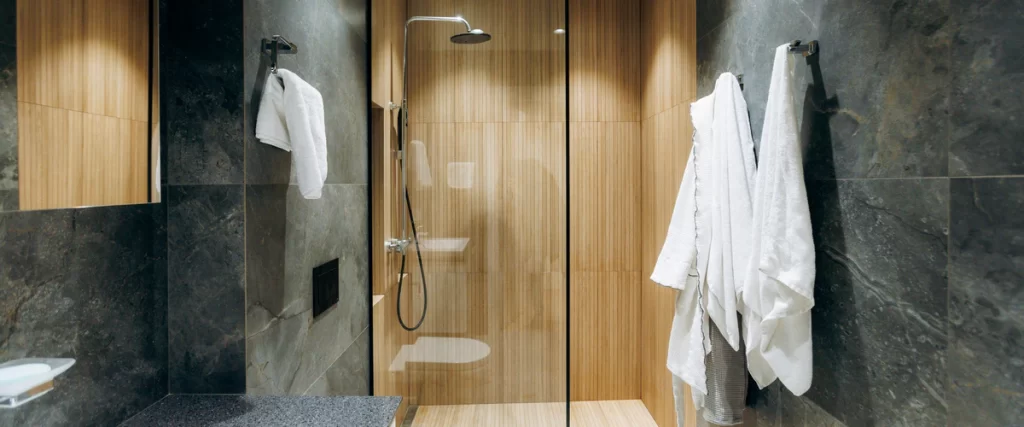
Why Phoenix Is Its Own Category
In 2025, Phoenix logged 122 days at or above 100°F, according to the National Weather Service, making it the second-hottest year on record for the city. That kind of sustained heat does not just affect how comfortable your bathroom feels. It affects how materials expand, contract, dry out, and degrade over time.
Most building materials are tested for normal climates. Arizona bathrooms are not a normal climate.
The Materials That Actually Hold Up
Porcelain Tile

Porcelain is the clear frontrunner for Phoenix bathrooms, floors, walls, and vanity backsplashes alike. It is fired at extremely high temperatures during manufacturing, which makes it dense, nearly nonporous, and totally unbothered by the heat outside your window. It does not warp, fade from UV exposure, or absorb the mineral-heavy water common throughout the Valley.
Large format porcelain tiles, think 24×24 or larger, are especially smart here. Fewer grout lines means fewer places for hard water deposits to build up, and the seamless look works beautifully in both small bathrooms and open walk-in shower designs.
If you want ideas for keeping those floors safe underfoot once they’re installed, our guide to non-slip bathroom tile options covers exactly what to look for.
Natural Stone
Marble, travertine, and slate bring a warmth to Arizona bathrooms that nothing else replicates, and they genuinely suit the desert landscape. The catch is maintenance. Natural stone is porous, and in a climate with both extreme heat and hard water, you are looking at more frequent sealing than you would need in, say, Seattle.
Travertine in particular benefits from a whole house water softener if your home has one, since mineral buildup on a porous surface is much harder to remove than on glazed tile.
When sealed properly and used with quality grout, natural stone holds up beautifully. When neglected, it shows it fast.
A Quick Comparison
| Material | Heat Resistance | UV Resistance | Maintenance | Best For |
| Porcelain tile | Excellent | Excellent | Low | Floors, walls, showers |
| Natural stone | Good | Good | Medium-High | Accent walls, floors |
| Ceramic tile | Good | Good | Low | Walls, low-traffic floors |
| Luxury vinyl plank | Fair | Poor | Low | Floors away from direct sun |
| Engineered wood | Poor | Poor | High | Not recommended for AZ bathrooms |
| Traditional hardwood | Poor | Poor | Very High | Avoid entirely |
What to Think Twice About
Luxury vinyl plank gets marketed as waterproof, and it is, but prolonged UV exposure can cause it to fade and warp near windows that get direct Arizona sun. If your bathroom has natural light pouring in, LVP needs either UV-protective window film or a location away from that light source.
Engineered wood carries the same concern, plus real vulnerability to the dramatic temperature changes between an air-conditioned interior and Phoenix summer outdoor air. The expansion and contraction over time leads to gaps, peeling, and eventually premature replacement.
For bathroom walls especially, peeling paint is one of the most common complaints Arizona homeowners bring to remodeling contractors. The dry air pulls moisture out of painted surfaces faster than it would in more humid climates, and that, combined with the heat, shortens the lifespan of standard interior paint considerably. Textured finishes and tile wall coverings simply last longer here.
Speaking of Arizona-specific home challenges, we wrote about what haboobs and sandstorms actually do to your home if you want to see the bigger picture on desert wear and tear.
The Ventilation and Moisture Control Piece
Extremely dry air sounds like it would mean zero mold risk. It does not. Phoenix bathrooms that lack proper ventilation still develop mold growth, because the moisture from showers has nowhere to go quickly enough. A well-sized exhaust fan, rated for your bathroom square footage, makes a significant difference in how long your tile grout, caulk, and wall surfaces stay in good condition.
This also matters for any natural stone surfaces. Regular sealing plus proper ventilation is the combination that keeps those materials performing well for years rather than requiring repair or replacement.
FAQ
Does ceramic tile work as well as porcelain in Phoenix? Ceramic tile is a solid choice for bathroom walls and lower-traffic floors. It is slightly more porous than porcelain, so it benefits from a quality glaze and careful sealing around grout lines. For a walk-in shower floor that sees daily water exposure, porcelain is the stronger call.
Can I use luxury vinyl plank in a Phoenix bathroom? Yes, with some caveats. Keep it away from direct sunlight and pair it with UV-protective window treatments. For bathrooms with heavy natural light, tile is a safer long-term investment.
How often does natural stone need to be sealed in Arizona? Most professionals recommend resealing once a year in desert climates, sometimes twice for travertine or marble in high-use showers.
Does hard water damage tile? It leaves mineral deposits, particularly on grout and natural stone. A whole house water softener reduces this significantly, and large format tiles with fewer grout lines give mineral deposits less surface area to accumulate.
Let Us Handle This For You
If reading all of this made you realize you would rather hand the whole project to someone who already knows Phoenix bathrooms inside and out, that is a completely reasonable conclusion to reach. Smart material choices, proper sealing schedules, ventilation specs, and layout decisions that account for your specific sun exposure, it is a lot to manage on your own.
Take a look at our bathroom remodeling services to see how we approach Arizona projects, then call us at (480) 999-6134 or message us here and we will take it from there.